Online Self-Presentation
Creating an Authentic Online Profile
Suggestions for an accurate description, recent photos, privacy boundaries and a pace of communication that suits you.
Informational guide in English.
Published
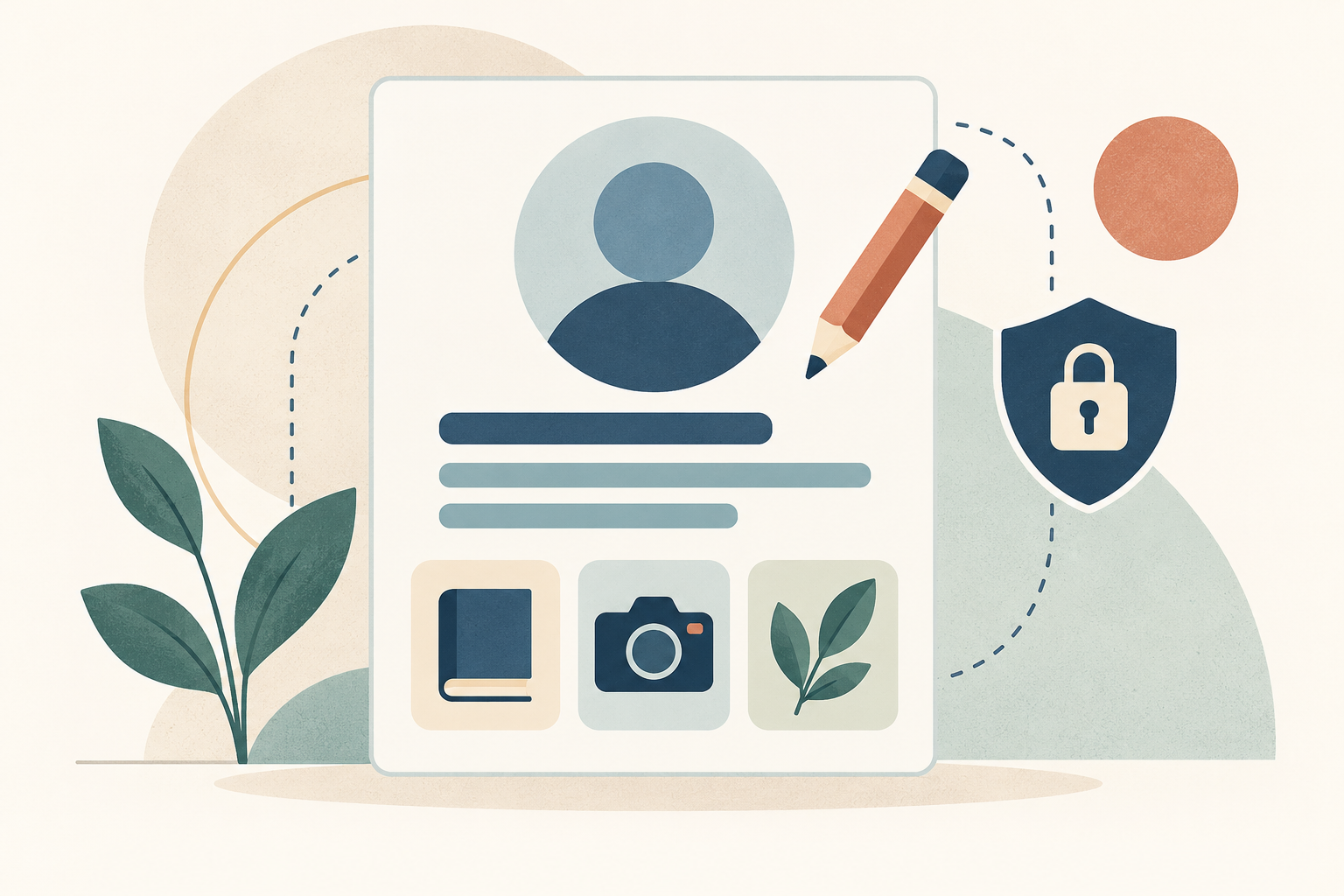
An online profile is a short introduction, not a complete account of your life. It can explain some of your interests and what you would like to talk about while leaving personal details private.
The aim is to describe yourself accurately in a way you are comfortable sharing. A profile cannot guarantee attention, compatibility or a lasting connection.
Choose recent, accurate photographs
Use an image that reasonably represents how you look now. A simple photo connected with an activity you enjoy can give you something to talk about. You do not need a professional photo shoot or an appearance that meets someone else's expectations.
Check what is visible in the background. Avoid exposing a home address, identifying documents or information about children. A photo reused across public accounts can also make those accounts easier to connect. eSafety Commissioner: Profile privacy
If other people are recognisable in an image, consider their privacy and ask before sharing it.
Give concrete examples of your interests
A short example is often clearer than a list of broad adjectives. Instead of only saying “I enjoy learning,” you might mention a language you are practising or a subject you like reading about.
Keep information accurate. Do not invent achievements, occupations or experiences to make a stronger impression. You can describe what you hope to try without presenting it as something you already do.
Express preferences respectfully
Explain which kinds of conversation or activities interest you. You can set a boundary without describing other people negatively: “I prefer to get to know someone gradually” tells a reader something useful about your own pace.
You do not need to publish details about past relationships, health, income or other private matters to make a profile complete.
Decide what you are ready to share
Before publishing, read the profile as if someone outside your intended audience might see it. Adjust privacy settings and remove information you would not want to disclose more widely.
You can edit the profile, pause an exchange or decide not to reply. Give yourself time to listen and to decide whether a conversation feels comfortable. These are personal choices, not an assessment of psychological readiness.
A practical review
Check whether the text is accurate, whether the pictures reveal more than intended, and whether your preferences are easy to understand. You can ask a trusted person to review the wording, while keeping control of what you share and publish.
For a general question about these materials, contact Artem. Artem handles enquiries personally, free of charge, according to available capacity. Submitting the contact form does not by itself create a contractual relationship or an entitlement to a particular service, outcome, or response time.
Related materials: intercultural communication and online safety. Return to the intercultural communication program.